Helping kids learn shapes and sizes is a delightful journey that can enrich their early developmental years.
As parents and caregivers, we often seek ways to make learning engaging and enjoyable, turning everyday moments into valuable teaching opportunities.
Understanding shapes and sizes not only aids in cognitive development but also enhances fine motor skills and spatial awareness. Let’s explore some gentle, creative approaches to help our little ones grasp these essential concepts.
The world around us is filled with shapes and sizes, from the roundness of a ball to the rectangular shape of a book. By incorporating these elements into daily life, we can make learning feel like a natural part of a child’s environment. One of the simplest ways to introduce shapes is through play. Children are naturally curious and enthusiastic about exploring their surroundings. By providing them with toys that feature various shapes—like building blocks or shape sorters—we can encourage them to identify and categorize these forms.
Playtime is an excellent opportunity for guided discovery. As children engage with these toys, we can join in their fun, asking gentle questions that prompt them to think about what they are seeing. For example, while they stack blocks, we might say, “Look at that triangle you made! Can you find another triangle in the room?” This approach fosters curiosity and reinforces their learning in a playful, relaxed manner.
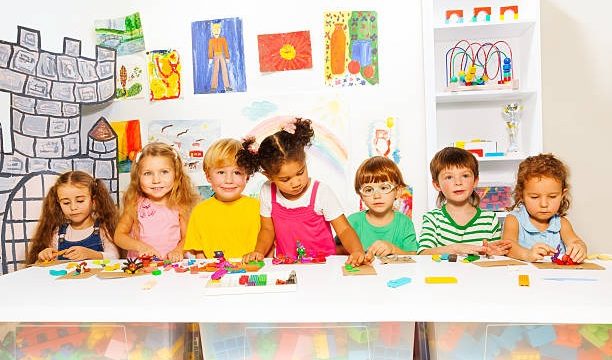
Another delightful way to teach shapes and sizes is through art and creativity. Arts and crafts can provide a hands-on experience that captivates young minds. Gather some colored paper, scissors, and glue, and invite your child to create a collage using different shapes. As they cut out circles, squares, and triangles, you can discuss the characteristics of each shape, helping them understand the differences in size and form. This not only nurtures their creativity but also solidifies their understanding of shapes in a tangible way.
Incorporating shapes into everyday activities can also be a gentle and effective strategy. During snack time, for instance, you might serve food items that vary in shape and size. A round apple, a rectangular piece of cheese, or a triangular piece of pizza can serve as perfect teaching moments. You can ask questions like, “What shape is your sandwich?” or “How many sides does this square cracker have?” This casual conversation reinforces learning without pressure, allowing children to absorb information naturally.
Storytime offers another wonderful opportunity to explore shapes and sizes. Many children’s books are designed to engage young readers with colorful illustrations that highlight various forms. Choose books that focus on shapes, such as “Brown Bear, Brown Bear, What Do You See?” or “Shapes, Shapes, Shapes!” Reading together provides a cozy environment for discussion. You can pause to point out shapes in the illustrations and relate them back to the real world. For instance, if you come across a picture of a sun, you might say, “Look at that big circle! The sun is a circle shape, just like a ball!”
As children become more familiar with shapes, introducing the concept of size can be a smooth transition. Comparing objects in their environment helps them understand the relationship between different sizes. Simple phrases like “This block is bigger than that one” or “Is your toy car longer than your shoe?” can spark their interest in measurement and size differentiation. Engaging in these comparisons during playtime can stimulate their critical thinking skills and enhance their observational abilities.
Exploring nature can further enrich a child’s understanding of shapes and sizes. A walk in the park or the backyard can be an adventure brimming with learning possibilities. Collecting leaves, stones, or flowers provides an experiential way to discuss shapes and sizes. You can encourage your child to look for round leaves, long sticks, or flat stones, turning the outing into a mini scavenger hunt. This not only reinforces their learning but also fosters a sense of appreciation for the world around them.
Creating a shape and size scavenger hunt at home can also be an entertaining way to engage your child. You can hide various shaped objects around the house or yard, prompting them to find each one based on clues related to size and form. This playful activity can spark excitement and curiosity, making learning feel like an adventure rather than a chore.
As children begin to grasp these concepts, it’s essential to celebrate their achievements, no matter how small. Acknowledging their efforts not only boosts their confidence but also encourages them to continue exploring and learning. Simple affirmations such as, “You did a great job finding that square!” can reinforce their understanding and motivate them to keep discovering.
Incorporating shapes and sizes into daily routines fosters a calm and enriching environment for children. By making learning interactive and enjoyable, we help nurture a love for knowledge that can last a lifetime. Whether through play, art, nature, or simple conversations, every moment spent exploring shapes and sizes adds to a child’s understanding of the world around them.
Ultimately, the goal is to create a relaxed atmosphere where children feel free to explore and ask questions. By weaving these learning opportunities into everyday experiences, we not only help them develop crucial cognitive skills but also strengthen our bond with them. In this gentle journey of discovery, we find joy in their growth and curiosity, celebrating each new shape and size they encounter along the way.