In today’s fast-paced world, the importance of play often gets overshadowed by the pressure to achieve and perform.
Yet, play is not merely a pastime; it is a vital part of our development, creativity, and even our mental well-being.
Guided play, in particular, offers a unique opportunity to explore concepts, nurture relationships, and foster a sense of wonder. By weaving together structured activities with the freedom to explore, guided play becomes a powerful tool for learning and growth.
The essence of guided play lies in its balance between freedom and structure. Unlike free play, which allows children to engage in their own imaginative worlds without much direction, guided play incorporates elements of instruction, encouraging exploration while still providing a framework. This approach can be especially beneficial in educational settings, where the aim is to instill a deeper understanding of concepts in a way that feels organic and enjoyable.
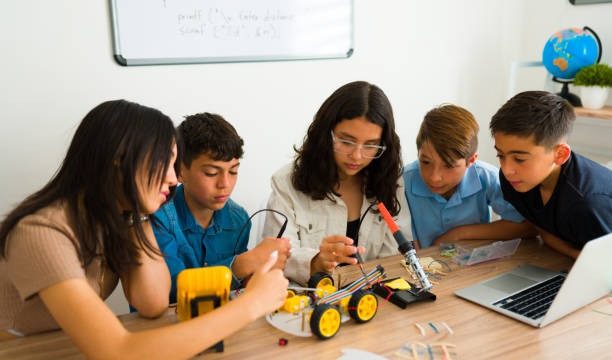
As we delve into the world of guided play, it’s essential to recognize its multifaceted benefits. For children, it can enhance cognitive development by stimulating curiosity and encouraging problem-solving skills. Imagine a group of children gathered around a table, building structures with blocks. A teacher might introduce concepts of balance and gravity through gentle prompts, guiding them to discover these principles naturally. The children are not just learning; they are engaging in a tactile experience that makes the concepts come alive.
Guided play also fosters social skills. When children participate in group activities, they learn to communicate, cooperate, and negotiate. These interactions are vital for developing empathy and understanding different perspectives. A simple game that involves sharing materials or taking turns can teach invaluable lessons about teamwork and patience, laying the foundation for healthy relationships in the future.
Incorporating guided play into daily routines can also be an enriching experience for families. Parents can create opportunities at home that blend learning with fun. For instance, cooking together can become a playful exploration of measurements and sequences, transforming the kitchen into a lively classroom. By engaging in these activities, parents not only bond with their children but also model curiosity and a love for learning that will last a lifetime.
A small shift toward balance can be achieved by integrating guided play into everyday life. It doesn’t have to be a grand event; even a short session of imaginative play can spark creativity. Consider a rainy afternoon where the living room becomes a spaceship, and everyday objects are transformed into tools for exploration. As children engage in this imaginative play, they learn to think creatively and adapt to new scenarios, skills that are invaluable throughout life.
Moreover, guided play is not limited to children. Adults can also benefit from playful exploration. Whether through hobbies, creative pursuits, or even team-building exercises at work, engaging in guided play can foster innovation and relieve stress. In a world that often prioritizes productivity, allowing ourselves moments of play can lead to unexpected breakthroughs and a renewed sense of purpose.
As we explore the role of guided play in our lives, it’s important to acknowledge the role of the adult facilitator. Whether a teacher, parent, or caregiver, the adult’s presence is crucial in guiding the experience. It’s not about dictating how play should unfold but rather about creating an environment where exploration is encouraged. By asking open-ended questions and providing gentle nudges, adults can inspire children to think critically and creatively.
The beauty of guided play is that it can be tailored to suit different interests and developmental stages. It can involve arts and crafts, storytelling, science experiments, or physical activities. The possibilities are endless, limited only by imagination. This flexibility allows for a personalized approach, ensuring that each child’s unique interests are honored and explored.
Incorporating elements of nature into guided play can further enhance the experience. Outdoor exploration offers a sensory-rich environment that stimulates curiosity and wonder. A simple nature walk can turn into a treasure hunt, where children collect leaves, stones, or flowers, prompting discussions about colors, textures, and ecosystems. Nature’s bounty provides countless opportunities for learning, all while fostering a deep connection with the environment.
As we navigate the complexities of modern life, guided play reminds us to slow down and embrace the joy of exploration. It encourages us to reconnect with our inner child, to find pleasure in the simple act of playing. For parents and educators, it serves as a gentle reminder that learning doesn’t have to be rigid or formal. Instead, it can be a joyous journey filled with discovery.
Ultimately, the exploration of concepts through guided play nurtures not only the mind but also the spirit. It encourages a sense of wonder that can inspire lifelong learning. As we embrace this approach, we cultivate an environment where curiosity flourishes, relationships deepen, and creativity thrives.
In a world where the pressures of achievement can often feel overwhelming, guided play offers a refreshing perspective. It reminds us that learning is a process, one that is best experienced with a sense of joy and wonder. So, let’s take a moment to embrace the beauty of play, allowing ourselves and the children in our lives to explore, discover, and grow together. In doing so, we create a brighter, more playful future for all.