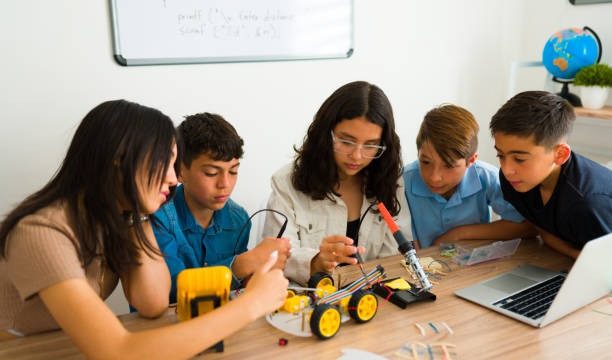
Encouraging STEM Learning Through Play
In today’s fast-paced world, the importance of STEM education—science, technology, engineering, and mathematics—has never been more pronounced.
As parents and caregivers, we often seek engaging ways to introduce these concepts to our children.
One of the most delightful and effective methods is through play. Play is not just a way for children to pass the time; it is a powerful learning tool that nurtures curiosity, creativity, and critical thinking.
The beauty of integrating STEM learning with play lies in its naturalness. Children are inherently curious, and when they are engaged in play, they explore the world around them with wonder and enthusiasm. This exploration can seamlessly incorporate STEM principles, allowing children to learn without the pressure of traditional instruction.
A gentle introduction to science can begin in the backyard or a local park. Simple activities like collecting leaves or observing insects can spark a love for nature and its underlying scientific principles. Encouraging children to ask questions about what they see fosters a natural curiosity. Why do leaves change color? How do ants work together? These inquiries can lead to fun discussions and hands-on experiments that deepen their understanding of the world.
As children play, they often engage in problem-solving, a vital component of STEM learning. Building a fort with cushions or constructing a tower with blocks encourages them to think critically about balance and stability. When a tower topples over, it presents an opportunity for reflection and experimentation. Children learn to analyze what went wrong and how they might approach the building differently next time. This process of trial and error cultivates resilience, teaching them that failure is simply a stepping stone to success.
Incorporating technology into play is another excellent way to enhance STEM learning. Many educational apps and games are designed to make learning fun and interactive. For instance, coding games can introduce children to the basics of programming in an engaging way. These platforms often use colorful graphics and exciting challenges to maintain interest, allowing children to develop problem-solving skills while having fun.
Creative play also plays a significant role in nurturing engineering skills. When children engage in arts and crafts, they are not just expressing themselves; they are also experimenting with design principles. Building with clay, creating structures with recycled materials, or even designing a simple machine encourages them to think like engineers. They learn about shapes, balance, and functionality through hands-on experiences, solidifying their understanding of engineering concepts.
Encouraging a spirit of inquiry can also be achieved through simple kitchen experiments. Cooking offers a delightful blend of math and science. Measuring ingredients, following a recipe, and observing chemical reactions (like baking soda and vinegar) can be both educational and delicious. This playful approach to learning not only teaches children about measurements and quantities but also introduces them to the scientific method in a fun, practical way.
Connecting play with mathematics can be just as engaging. Board games that require counting, strategy, or pattern recognition can make math feel less daunting and more enjoyable. Even everyday activities, such as shopping, can become a playful math lesson. Asking children to help calculate the total cost or to compare prices teaches them about numbers in a real-world context, making math relevant and engaging.
Outdoor play provides another rich environment for STEM learning. Nature walks can turn into lessons about ecosystems, weather patterns, and biology. Observing the seasons change can ignite discussions about the science behind these transformations. For instance, why do trees lose their leaves in the fall? What happens to animals during winter? These questions can lead to explorations that deepen their understanding of the natural world.
As children grow, their play can evolve into more complex projects. Encouraging them to take on larger challenges, such as building a birdhouse or creating a small garden, allows them to apply their STEM knowledge in a practical setting. These projects require planning, problem-solving, and creativity, reinforcing their learning and boosting their confidence in their abilities.
It’s essential to create an environment where children feel safe to explore and make mistakes. Encouraging open-ended play allows them to take the lead in their learning journey. Providing them with materials and space to experiment without strict guidelines fosters independence and innovation. This approach helps children develop a growth mindset, understanding that learning is a process that involves exploration and discovery.
As parents and caregivers, we can support this journey by participating in play without taking control. Asking open-ended questions can guide their exploration while allowing them to lead the way. Instead of providing all the answers, we can encourage them to think critically and come up with their solutions. This nurturing approach helps build their confidence and instills a lifelong love for learning.
Incorporating STEM learning through play ultimately enriches a child’s development. It promotes not only academic skills but also social and emotional growth. Children learn to collaborate, communicate, and negotiate with their peers during play, essential skills for their future.
As we navigate the complexities of education in our modern world, we can find comfort in the simplicity of play. By encouraging our children to explore, create, and experiment, we provide them with the tools they need to thrive in an increasingly STEM-focused society.
In the end, the joy of learning through play is a gift that lasts a lifetime. It is an invitation to curiosity and a pathway to innovation. So, let’s embrace the power of play and watch as our children blossom into the thinkers, creators, and problem-solvers of tomorrow.