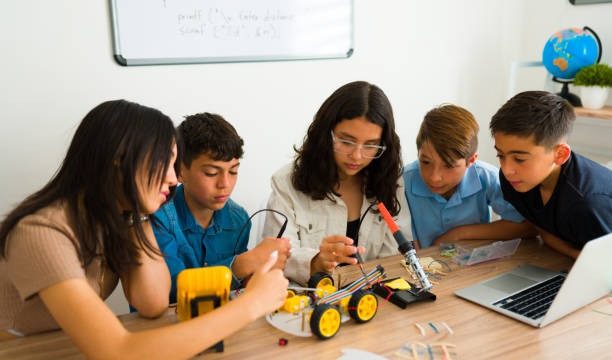
Encouraging Cooperative Thinking in Every Lesson
In the ever-evolving landscape of education, fostering a sense of collaboration among students has become more essential than ever.
Cooperative thinking, which promotes working together to solve problems and learn from one another, can transform a classroom from a place of solitary learning into a vibrant community of thinkers.
This approach not only enriches the educational experience but also cultivates skills that students will carry with them far beyond their school years.
Creating a nurturing environment where cooperative thinking thrives begins with small, intentional shifts in daily teaching practices. The essence of cooperative thinking lies in the understanding that learning is not a competition, but a shared journey. When students feel comfortable collaborating, they are more likely to engage deeply with the material and with each other.
A gentle introduction to cooperative learning can start with simple group activities. When students are given the opportunity to work together on a project or a problem, they learn to value each other’s perspectives. This could be as straightforward as breaking them into small groups to discuss a topic before sharing their insights with the class. Such formats encourage dialogue and foster a sense of belonging, allowing students to appreciate the diverse viewpoints that each member brings to the table.
As educators, it’s important to model cooperative thinking in our own interactions. Demonstrating how to listen actively and respond thoughtfully sets a powerful example for students. When they see their teachers engaging in respectful discussions, they are more likely to mirror that behavior in their own collaborations. This modeling can be as simple as sharing your thought process during lessons or showing vulnerability when discussing challenges. By doing so, you invite students to embrace the idea that learning is a communal effort, where everyone’s input is valuable.
Incorporating cooperative thinking into every lesson doesn’t require a complete overhaul of the curriculum. Instead, it can be integrated seamlessly into existing structures. For instance, consider how group discussions can enhance understanding in subjects like literature or history. When students discuss characters’ motivations or historical events in pairs or small groups, they can explore different interpretations and deepen their comprehension. This not only enriches their learning but also reinforces the idea that knowledge can be constructed collectively.
A small shift toward balance can be achieved through the careful design of group activities. It’s important to ensure that tasks are structured in a way that requires input from all members. This could mean assigning roles within a group, such as a facilitator, a note-taker, or a presenter. By diversifying contributions, every student has a chance to shine, and the group’s success hinges on everyone’s participation. This method not only fosters accountability but also builds trust among peers, as they learn to rely on each other’s strengths.
Encouraging cooperative thinking also involves creating a safe space for students to express their ideas without fear of judgment. This can be cultivated through ground rules established at the beginning of the school year. Emphasizing respect, openness, and the importance of constructive feedback helps lay the groundwork for fruitful collaborations. When students know that their thoughts will be valued, they are more likely to share and engage with their classmates.
As lessons progress, it’s beneficial to reflect on the cooperative processes that have occurred. Taking a moment at the end of a group activity to discuss what went well and what could be improved can enhance future collaborations. This reflective practice allows students to recognize the importance of their contributions and the dynamics of teamwork. It also encourages them to think critically about how they can support one another in achieving common goals.
The role of technology in fostering cooperative thinking cannot be overlooked. With the rise of digital tools, students can collaborate in ways that extend beyond the classroom. Online platforms enable group projects, discussions, and brainstorming sessions to occur anytime and anywhere. This flexibility not only accommodates different learning styles but also prepares students for the increasingly digital world they will encounter in their futures.
As educators, it’s essential to remain mindful of the diverse backgrounds and experiences that each student brings to the classroom. Cooperative thinking thrives in environments that celebrate diversity and inclusion. By incorporating multicultural perspectives into lessons, teachers can help students appreciate the richness of different viewpoints. This can lead to more meaningful discussions and a greater understanding of the world around them, reinforcing the idea that collaboration is a pathway to broader knowledge and empathy.
Nurturing cooperative thinking in every lesson is a journey that requires patience, creativity, and a commitment to fostering a community of learners. It’s about creating an atmosphere where students feel empowered to share their ideas, challenge one another respectfully, and work together toward common objectives.
As we strive to cultivate these skills, we prepare our students not only for academic success but also for the collaborative nature of the world they will navigate as adults. In a society that values cooperation and teamwork, the ability to think and work together is more than just an academic skill—it’s an essential life skill.
In conclusion, encouraging cooperative thinking in the classroom is a rewarding endeavor that enriches the educational experience for both students and teachers. By embracing collaboration, we create a learning environment that is dynamic, inclusive, and supportive. As we foster these connections, we not only enhance our lessons but also inspire a generation of thinkers who value the power of working together. The journey may begin in the classroom, but its impact will resonate far beyond those walls.