In the world of education, the subject of math often stands out as a challenging hurdle for many students.
Yet, it doesn’t have to be a daunting experience.
With a little creativity and a hands-on approach, math lessons can transform into engaging, enjoyable activities that not only foster understanding but also spark a love for learning. Let’s explore how to make math lessons more interactive and accessible, creating a nurturing environment where students can thrive.
A little creativity goes a long way
The first step in making math lessons hands-on is to infuse creativity into the curriculum. Traditional methods often rely heavily on textbooks and worksheets, which can lead to disengagement. Instead, consider using everyday objects to demonstrate mathematical concepts. For example, using items like blocks, buttons, or even fruits can help illustrate counting, addition, and subtraction in a tangible way. When students can physically manipulate objects, they are more likely to grasp abstract concepts.
Incorporating real-life scenarios can also enhance learning. Imagine teaching fractions by cutting a pizza into slices. This not only makes the lesson relevant but also allows students to visualize and understand the concept through a delicious, hands-on experience. By connecting math to the world around them, students begin to see the subject as a useful tool rather than a mere requirement.
Creating a collaborative atmosphere
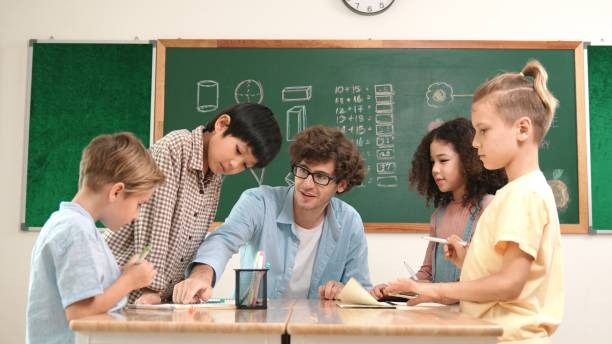
Collaboration can be a powerful tool in any learning environment. Group activities encourage students to work together to solve problems, fostering a sense of community and teamwork. For instance, setting up math stations where students rotate through different hands-on activities can be a delightful way to keep everyone engaged. Each station might focus on a different concept, such as geometry or measurement, allowing students to explore various aspects of math while learning from one another.
Encouraging peer teaching is another effective strategy. When students explain concepts to their classmates, they reinforce their own understanding while helping others. This collaborative spirit not only builds confidence but also creates a supportive environment where everyone feels valued.
A small shift toward balance
Integrating movement into math lessons can also be beneficial. Research suggests that physical activity can enhance cognitive function, making it easier for students to absorb information. Simple activities like math scavenger hunts can get students moving while practicing their skills. For example, create a list of math problems that lead students to various locations around the classroom or school. As they solve each problem, they discover new clues, making the lesson feel like an adventure.
Another idea is to incorporate math games that require movement, such as hopscotch with numbers or a math relay race. These activities not only make learning fun but also help to break up the monotony of sitting at a desk for extended periods.
Embracing technology
In today’s digital age, technology can be a valuable ally in making math lessons more hands-on. There are countless educational apps and online resources that offer interactive math games and simulations. These tools can provide immediate feedback, allowing students to learn at their own pace. Incorporating tablets or computers into lessons can also make math more engaging, as students can explore concepts through interactive platforms.
Virtual reality is another exciting avenue for hands-on learning. Imagine students being able to walk through a geometric landscape or manipulate three-dimensional shapes in a virtual environment. While this technology may not be accessible to everyone, even simple online simulations can provide a fresh perspective on mathematical concepts.
Celebrating mistakes as learning moments
One of the most important aspects of a hands-on math approach is fostering a culture that embraces mistakes. In a traditional classroom, the fear of getting answers wrong can stifle creativity and participation. By shifting the focus from perfection to exploration, students are more likely to take risks and engage with the material. Encourage students to view mistakes as valuable opportunities for growth and understanding.
Creating a safe space for discussion can help students feel more comfortable sharing their thoughts and challenges. Group discussions about problem-solving strategies can lead to rich conversations, allowing students to learn from each other’s experiences. When they see that everyone struggles sometimes, it normalizes the learning process and encourages perseverance.
Connecting with the community
Bringing the outside world into the classroom can also enhance hands-on learning. Consider organizing field trips or inviting guest speakers who can share real-world applications of math. A visit to a local bakery, for example, can illustrate concepts like measurement and ratios in a practical context. When students see how math is used in various professions, it can inspire them to appreciate its relevance in their lives.
Additionally, community projects that involve math can be incredibly rewarding. Whether it’s planning a school garden, budgeting for a class trip, or analyzing local statistics, these activities can provide meaningful experiences that demonstrate the practical side of math.
Nurturing a love for learning
Ultimately, the goal of transforming math lessons into hands-on experiences is to nurture a genuine love for learning. When students are actively involved in their education, they are more likely to retain information and develop critical thinking skills. By making math relatable, interactive, and enjoyable, we can help students build confidence and a positive attitude toward the subject.
In conclusion, making math lessons hands-on is about creating an environment where students feel empowered to explore, collaborate, and grow. By incorporating creativity, movement, technology, and real-life applications, we can turn math into an engaging adventure. As educators, parents, and mentors, we have the opportunity to inspire the next generation of thinkers, problem solvers, and innovators. With a little imagination and a commitment to hands-on learning, we can transform the way students experience math, paving the way for a brighter future.